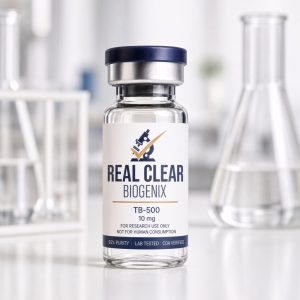
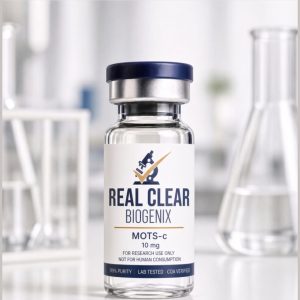
BPC-157 10mg
BPC-157 is a synthetic 15-amino-acid peptide used in laboratory research. Published studies have investigated the compound in experimental models involving gastrointestinal tissue, musculoskeletal injury, vascular signaling, and neurological pathways.
BPC-157 promotes gastrointestinal healing, enhances muscle and tendon repair, and has neuroprotective effects, making it beneficial for recovery from injuries and neurological conditions. (PMID: 15840402, 36551977, 37242459)
BPC-157 Research Topics:
-
Gastrointestinal Research Models
BPC-157 has been studied in experimental models involving gastrointestinal tissue, mucosal integrity, intestinal anastomoses, and vascular responses. The available literature primarily consists of animal studies and preclinical reviews. (PMID: 15840402) -
Musculoskeletal Research Models:
Researchers have examined BPC-157 in animal and laboratory models involving skeletal muscle, tendons, ligaments, and related cellular processes.
A 2006 study evaluated BPC-157 in a rat model of transected quadriceps muscle. Because this research was conducted in animals, its results should not be interpreted as evidence of an effect in humans.
(PMID: 36551977) -
Neurological and Signaling Research
Preclinical publications have also investigated BPC-157 in relation to neurotransmitter systems, the brain-gut axis, and experimental neurological models. These studies are exploratory and do not establish clinical applications. (PMID: 37242459)
Peer-Reviewed Studies
Seiwerth, S., Sikiric, P., Grabarevic, Z., Zoricic, I., Hanzevacki, M., Ljubanovic, D., … & Kolega, Z. (1997)
Journal of Physiology-Paris, 91(3-5), 173-178.
Staresinic, M., Petrovic, I., Novinscak, T., Jukic, I., Pevec, D., Suknaic, S., … & Sikiric, P. (2006)
Journal of orthopaedic research, 24(5), 1109-1117.
Structure

Source: PubChem
Sequence: Gly- Glu-Pro-Pro-Pro-Gly-Lys-Pro-AlaAsp-Asp-Ala-Gly-Leu-Val
Molecular Formula: Cs2HgaN1s022
Molecular Weight: 1419.556 g/mol
PubChem CID: 108101
Referenced Citations
- T. Huang et al., “Body protective compound-157 enhances alkali-burn wound healing and Promotes Proliferation, migration, and angiogenesis in vitro,” Drug Des. Devel. Ther., vol. 9, RR- 2485-2499, 2015.
- D. Drmic et al., “Counteraction of perforated cecum lesions in rats: Effects of pentadecapeptide BPC 157, L-NAME and L-arginine,” World J. Gastroenterol.1 vol. 24, no. 48, pp. 5462-5476, Dec. 2018.
- F. Amie et al., “By Passing major venous occlusion and duodenal lesions in rats, and therapy with the stable gastric pentadecapeptide BPC 157, L-NAME and Larginine,” World J. Gastroenterol.1 vol. 24, no. 47, QQ. 5366-5378, Dec. 2018.
- A. Duzel et al., “Stable gastric pentadecapeptide BPC 157 in the treatment of colitis and ischemia and reperfusion in rats: New insights,” World J. Gastroenterol., vol. 23, no. 48, QQ. 8465-8488, Dec. 2017.
- J. Vukojevic et al., “Rat inferior caval vein_{ICV) ligature and particular new insights with the stable gastric pentadecapeptide BPC 157,” Vascul. Pharmacol., vol. 106, QQ. 54- 66, 2018.
- D. Drmic et al., “Celecoxib-induced gastrointestinal, liver and brain lesions in rats, counteraction by BPC 157 or L-arginine, aggravation by L-NAME,” World J. Gastroenterol., vol. 23, no. 29, QQ. 5304- 5312, Aug. 2017.
- M.-J. Hsieh et al., “Therapeutic Potential of Pro-angiogenic BPC157 is associated with VEGFR2 activation and LIQ-regulation,” J. Mol. Med. Berl. Ger., vol. 95, no. 3, QQ. 323- 333, 2017.
- Z. Grabarevic et al., “The influence of BPC 157 on nitric oxide agonist and antagonist induced lesions in broiler chicks,” J. Physiol. Paris, vol. 91, no. 3-51 P- 139-149, Oct. 1997.
- P. Sikiric et al., “Novel Cytoprotective Mediator, Stable Gastric Pentadecapeptide BPC 157. Vascular Recruitment and Gastrointestinal Tract Healing,” Curr. Pharm. Des., vol. 24, no. 18, pp. 1990-2001, 2018.
- S. Seiwerth et al., “BPC 157 and Standard Angiogenic GF. Gastrointestinal Tract Healing, Lessons from Tendon, Ligament, Muscle and Bone Healing,” Curr. Pharm. Des., vol. 24, no. 18, pp. 1972-1989, 2018.
- C.-H. Chang, W.-C. Tsai, M.-S. Lin, Y.-H. Hsu, and J.-H. S. Pang, “The promoting effect of pentadecapeptide BPC 157 on tendon healing involves tendon, cell survival, and cell migration,” J. Appl. Physiol., vol. 110, no. 3, pp. 774-780, Oct. 2010.
- Y.-L. Hu et al., “FAK and paxillin dynamics at focal adhesions in the protrusions of migrating cells,” Sci. Rep., vol. 41 p. 6024, Aug. 2014.
- K. Skrlec et al., “Engineering recombinant Lactococcus lactis as a delivery vehicle for BPC-157 peptide with antioxidant activities,” ppl. Microbial. Biotechnol., vol. 102, no. 23, pp. 10103-10117, Dec. 2018.
- D. Strinic et al., “BPC 157 counteracts QTc prolongation induced by haloperidol, flurhenazine, clozapine, olanzapine, quetiapine. sulpiride, and metoclopramide in rats,” Life Sci., vol. 186, RR- 66-79, Oct. 2017.
- N. Jelovac et al. 1 “Pentadecapeptide BPC 157 attenuates disturbances induced by neuroleptics: the effect on catalepsy. and gastric ulcers in mice and rats,” Eur. J. Pharmacol., vol. 379, no. 1, PR· 19-31, Aug.:. 1999.
- I. Tlak Gajger, J. Ribaric, M. Smodis Skerl, J. Vlainic, and P. Sikiric, “Stable gastric pentadecapeptide BPC 157 in honeybee (Apiis mellifera) therapv, to control Nosema ceranae invasions in apiary. conditions,” J. Vet. Pharmacol. Ther., vol. 41, no. 4, pp. 614- 621, Aug. 2018.
For laboratory research use only. Not for human or veterinary use.
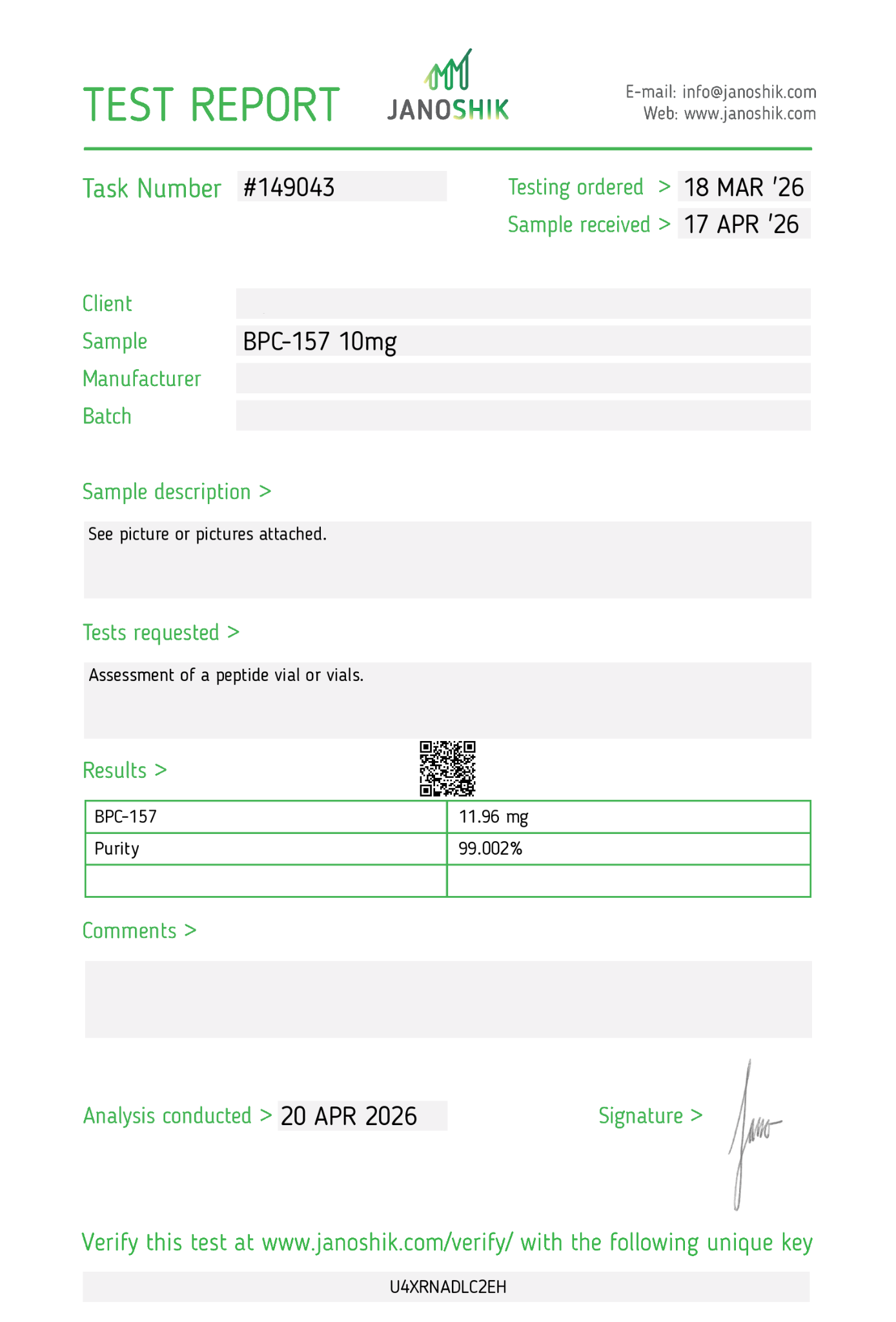
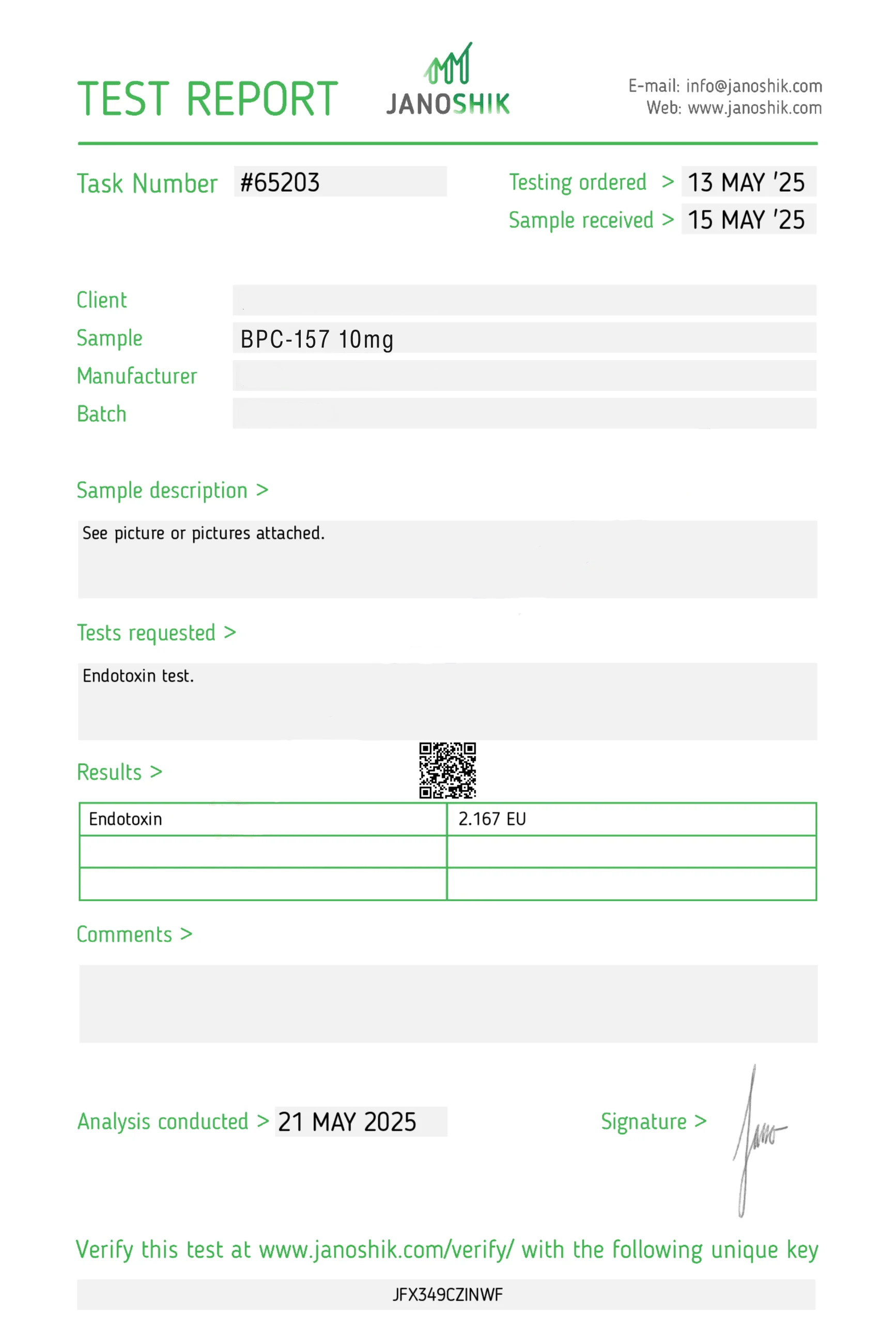
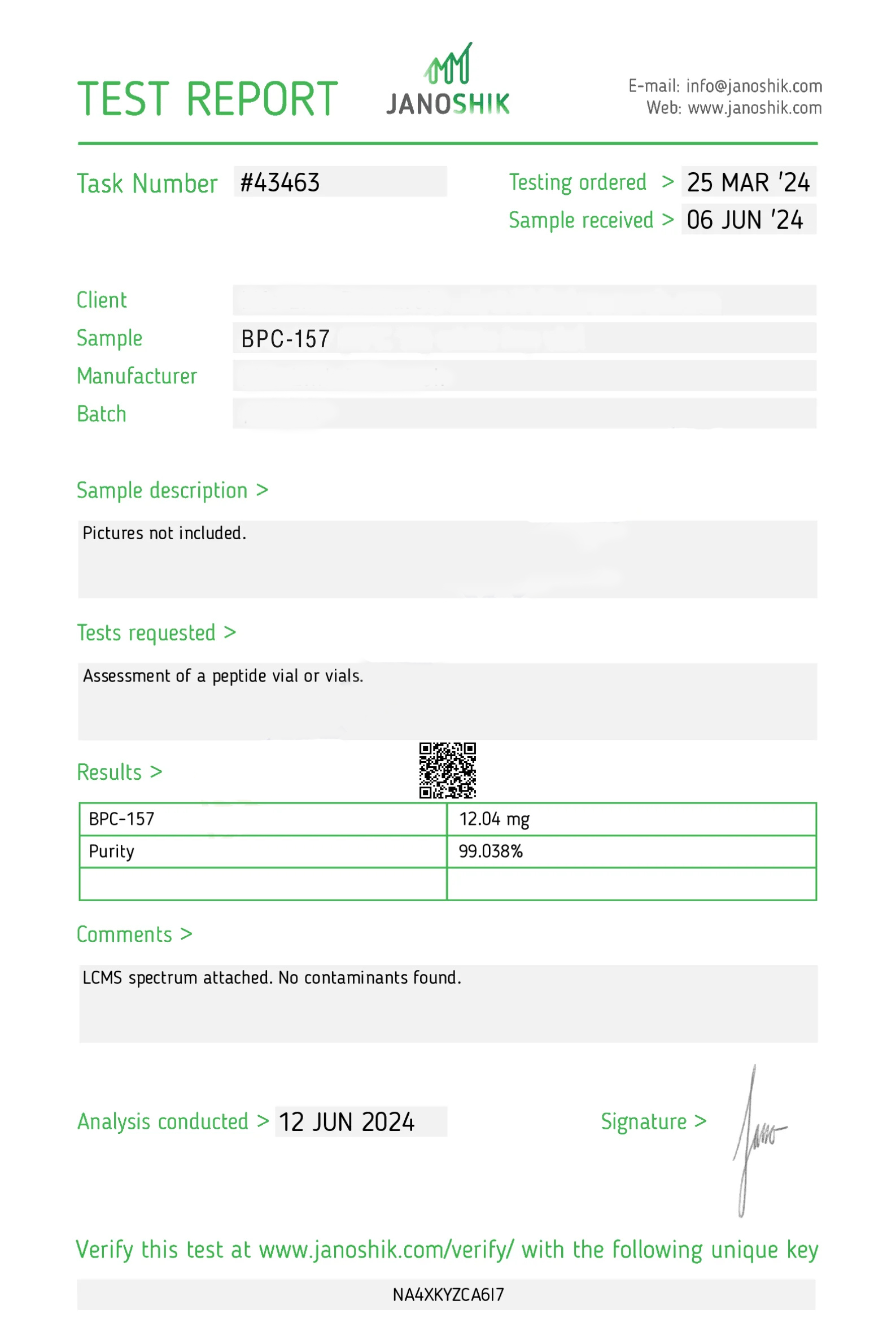
Certificate of Analysis
Independent laboratory testing confirms purity and composition of this research peptide.