MOTS-c 10mg
MOTS-c Research Overview
MOTS-c is a 16-amino-acid mitochondrial-derived peptide encoded within the mitochondrial 12S rRNA region. Laboratory research has investigated MOTS-c in relation to mitochondrial signaling, cellular stress responses, nuclear gene regulation, and mitochondrial-to-nuclear communication.
Research Applications
MOTS-c may be used in controlled laboratory research involving:
- Mitochondrial signaling pathways
- Mitochondrial-to-nuclear communication
- Cellular stress-response mechanisms
- AMPK-associated cellular signaling
- Nuclear translocation
- Gene-expression regulation
- Stress-responsive transcription factors
- Molecular and cellular pathway analysis
Mitochondrial and Nuclear Signaling Research
Cell-based research has investigated the ability of MOTS-c to translocate to the nucleus under defined cellular stress conditions. Experimental findings have examined its relationship with AMPK-dependent signaling and changes in nuclear gene expression.
Research has also examined interactions between MOTS-c-associated signaling and stress-responsive transcriptional pathways. These findings provide a basis for continued investigation of mitochondrial-to-nuclear communication and cellular signaling mechanisms under controlled laboratory conditions.
Structure

Sequence: Met-Arg-Trp-Gln-Glu-Met-Gly-Tyr-Ile-Phe-Tyr-Pro-Arg-Lys-Leu-Arg
Molecular Formula: C H N O S Molecular Weight: 2174.64 g/mol
PubChem SID: 255386757
CAS Number: 1627580-64-6
Synonyms: Mitochondrial open reading frame of the 12S rRNA-c, MT-RNR1
For laboratory and research use only. Not for human or veterinary use, consumption, administration, diagnostic, or therapeutic purposes.
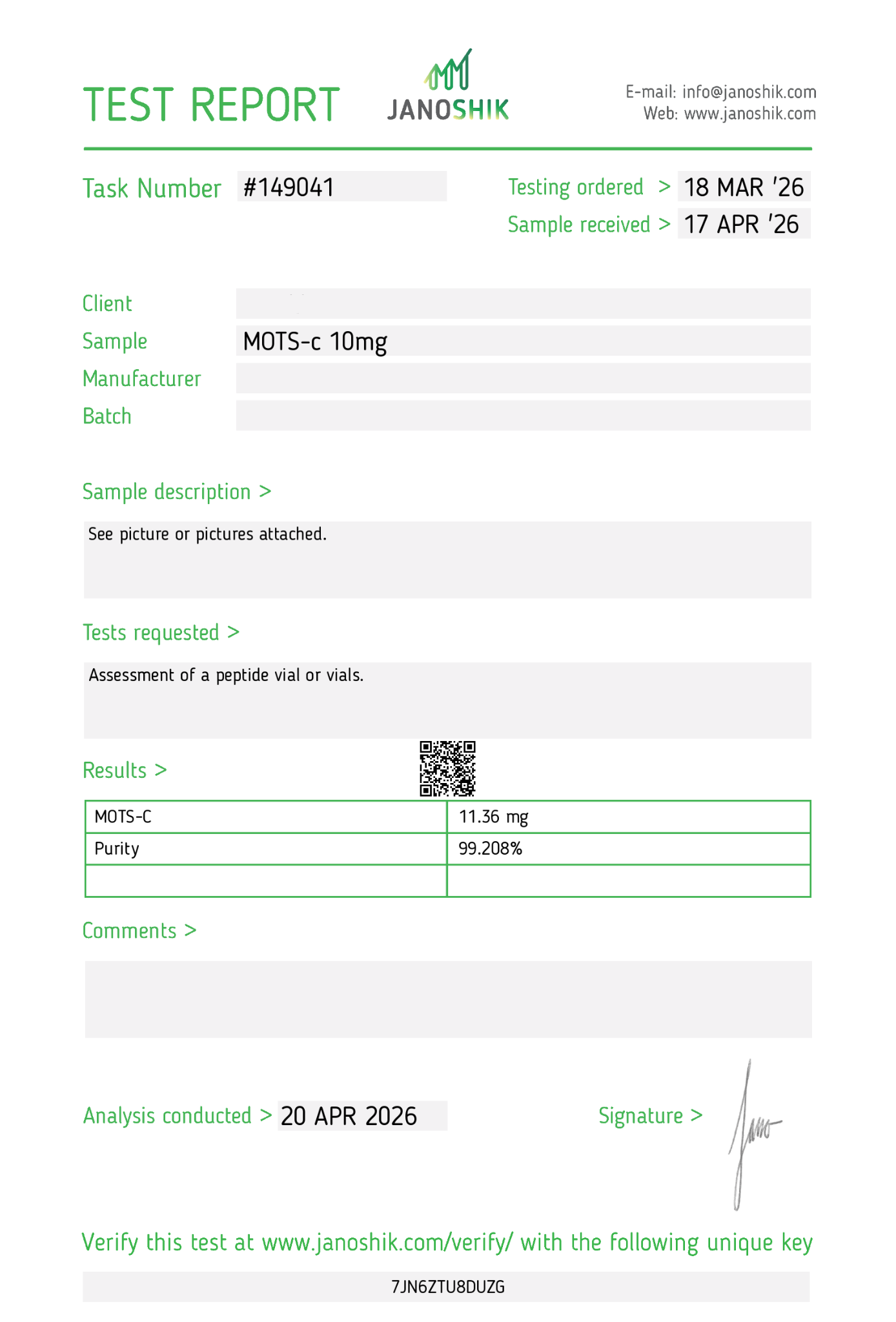
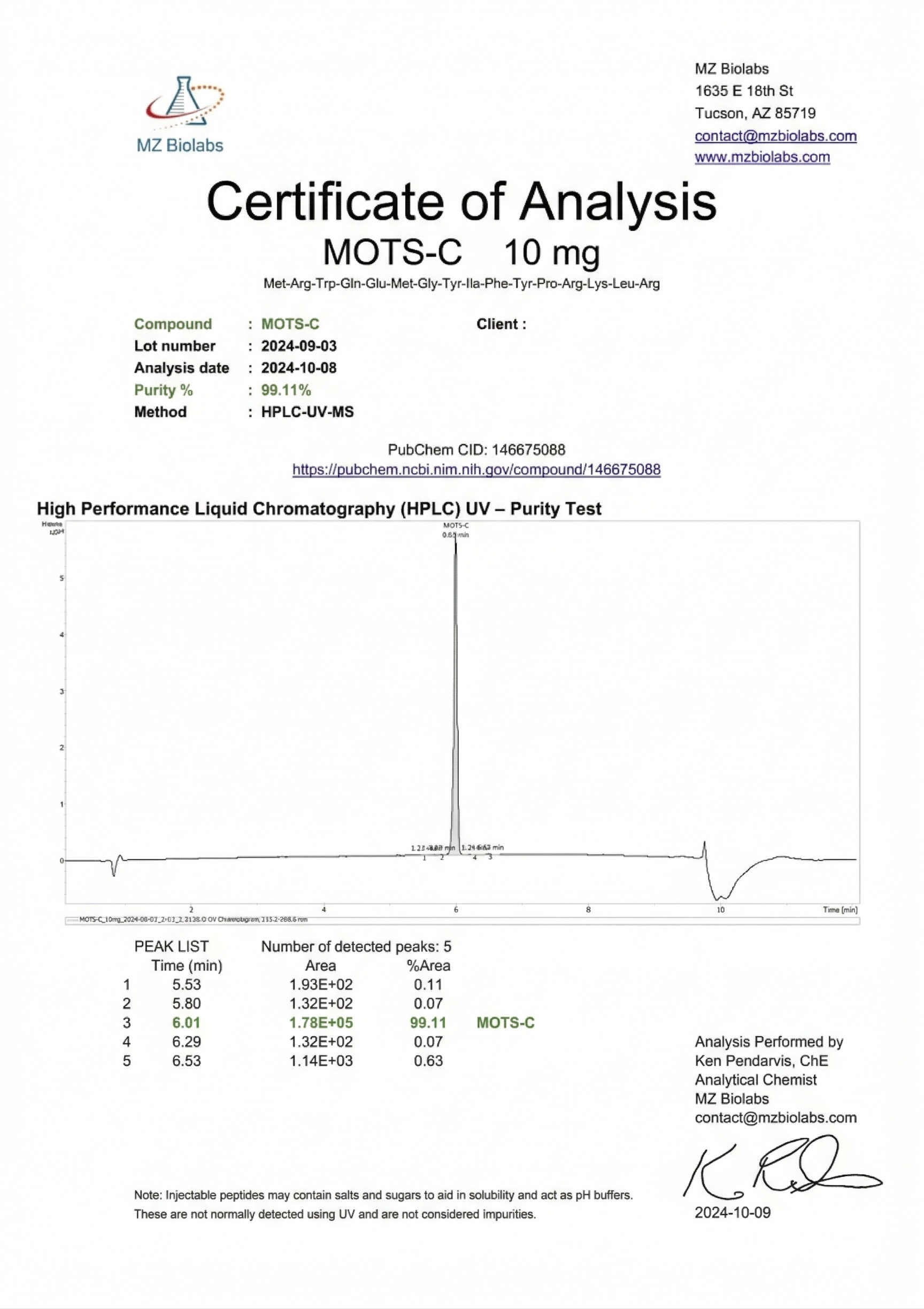
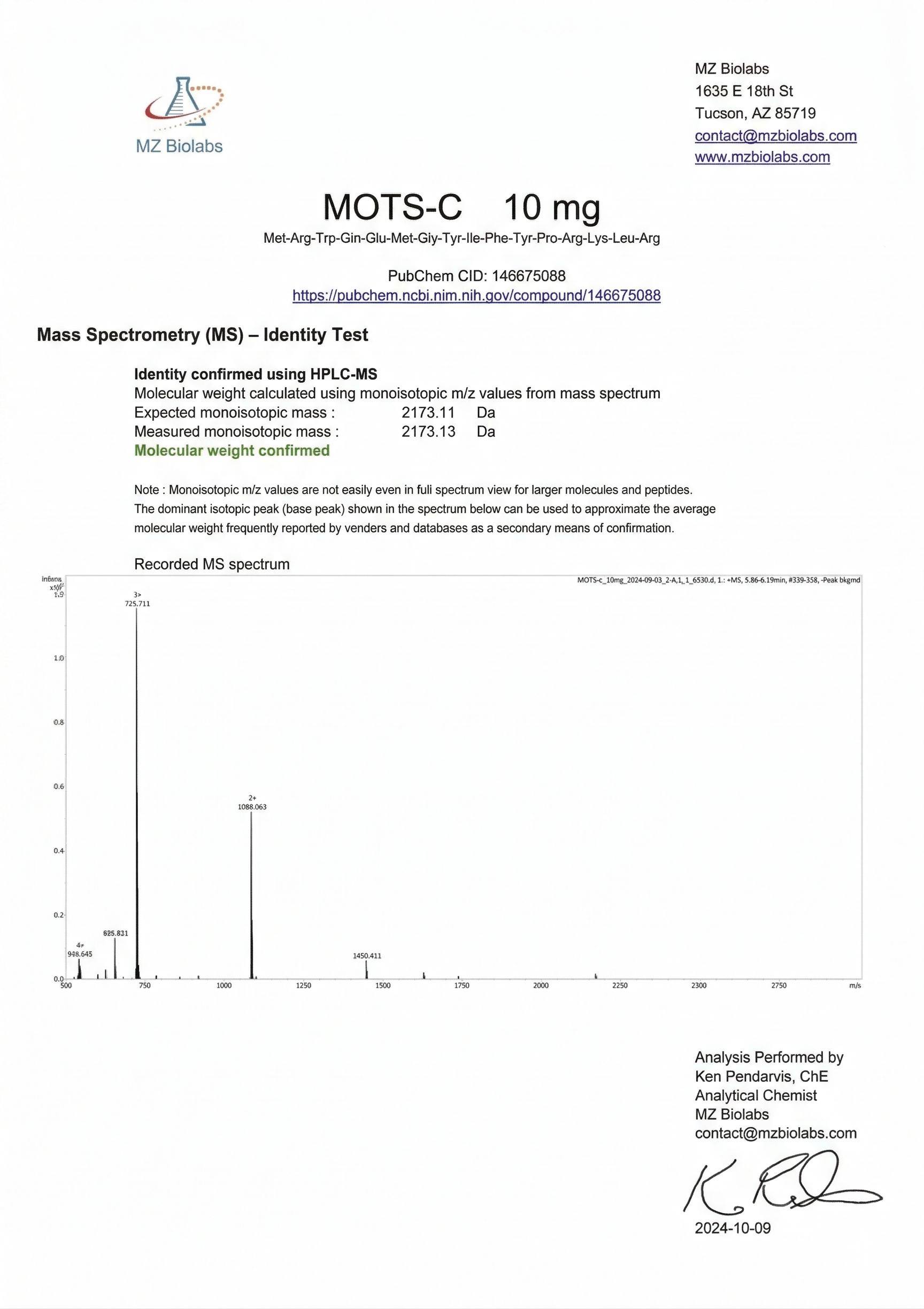
Certificate of Analysis
Independent laboratory testing confirms purity and composition of this research peptide.