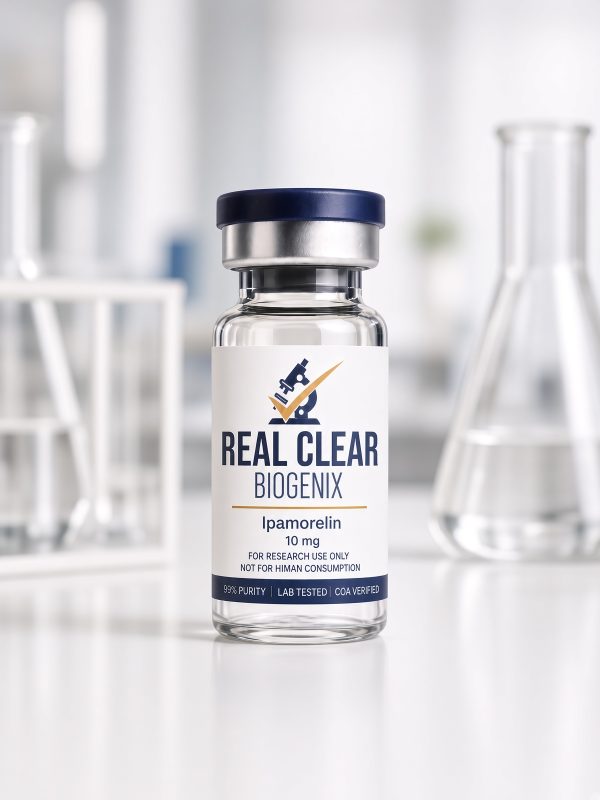
Ipamorelin 10mg
Ipamorelin Research Overview
Ipamorelin is a synthetic pentapeptide studied as a selective growth hormone secretagogue. Laboratory research has examined its interaction with growth hormone signaling, pituitary-cell activity, gastrointestinal motility, and bone-related measurements.
The cited studies include in-vitro experiments and animal models. Their findings do not establish safety, efficacy, or therapeutic effects in humans.
Ipamorelin Research Areas
Growth Hormone Secretion Models
Early research evaluated ipamorelin using cultured rat pituitary cells and animal models. Researchers compared its growth hormone-releasing activity with other secretagogues and examined its selectivity relative to additional pituitary and adrenal hormones.
These experiments characterized ipamorelin’s pharmacological activity but did not evaluate muscle development, athletic performance, recovery, fat reduction, or anti-aging outcomes. (PMID: 9849822)
Longitudinal Bone-Growth Research
A 1999 study administered ipamorelin to adult female rats and measured longitudinal bone-growth rate, body-weight changes, circulating IGF-1, bone markers, and pituitary responsiveness.
The findings apply to the specific rat model and do not establish bone-development or growth effects in humans. (PMID: 10373343)
Gastrointestinal-Motility Research
Ipamorelin has been examined in a rodent model of postoperative ileus. Researchers measured gastrointestinal transit, fecal output, food intake, and other experimental endpoints following surgically induced gastrointestinal dysfunction.
This animal study does not demonstrate that ipamorelin supports gastrointestinal motility or treats postoperative ileus in humans. (PMID: 19289567)
Glucocorticoid and Bone-Formation Models
Another study examined ipamorelin in adult rats receiving glucocorticoid treatment. Researchers measured bone-formation parameters and other biological responses within that experimental model.
The results do not establish protection from bone loss, treatment of catabolic conditions, or other clinical effects in humans. (PMID: 11735244)
Reference Citation:
- Raun, K., Hansen, B.S., Johansen, N.L., et al. (1998). Ipamorelin, the first selective GH secretagogue. European Journal of Endocrinology, 139(6), 552–561. https://pubmed.ncbi.nlm.nih.gov/9849822/
-
Burgos, R.A., Meier, E., Reynolds, N., et al. (1999). Ipamorelin, a novel hormone releasing peptide, induces longitudinal bone increase in rats. European Journal of Endocrinology, 141(2), 180–183.
https://pubmed.ncbi.nlm.nih.gov/10373343/ - Bjurling, M., et al. (2011). The bone hormone secretagogue ipamorelin improves gastrointestinal transit in a postoperative ileus model in rats. European Journal of Pharmacology, 657(1–3), 168–175.
https://pubmed.ncbi.nlm.nih.gov/21320445/ - Andersen, J.L., et al. (2001). GH secretagogues stimulate longitudinal bone in rats and prevent bone loss induced by glucocorticoid treatment. Journal of Bone and Mineral Research, 16(11), 2103–2110. https://pubmed.ncbi.nlm.nih.gov/11697804/
For laboratory research use only. Not for human or veterinary use.
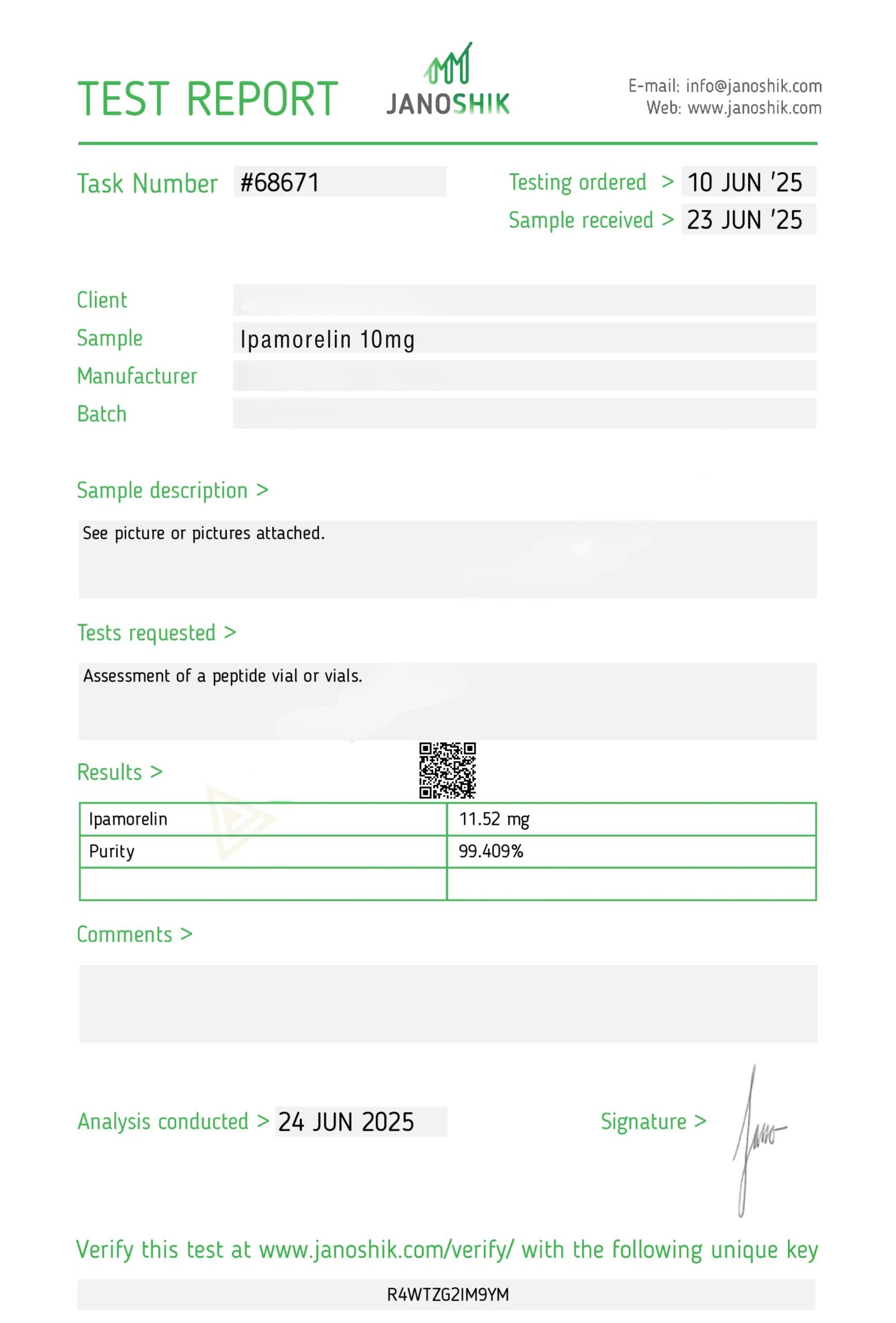
Certificate of Analysis
Independent laboratory testing confirms purity and composition of this research peptide.