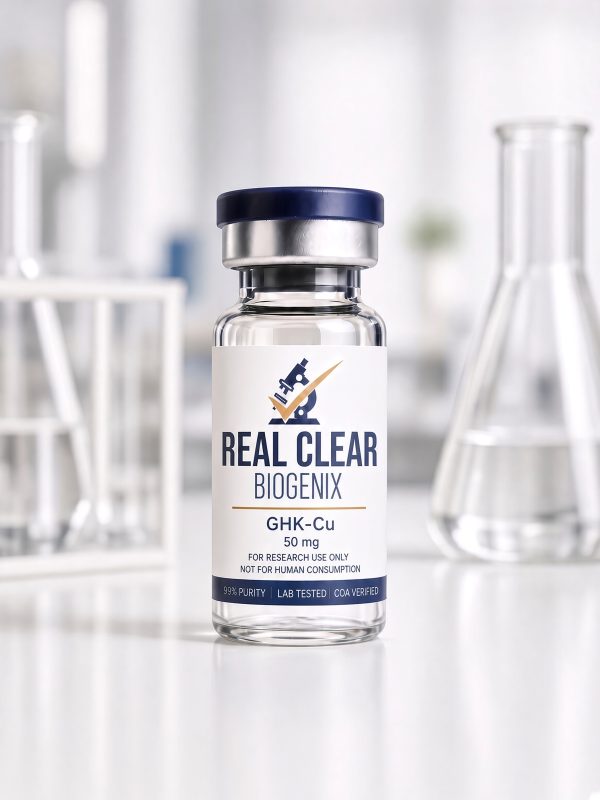
GHK-Cu 50mg
GHK-Cu Research Overview
GHK-Cu is a copper complex of the naturally occurring tripeptide glycyl-L-histidyl-L-lysine. Laboratory research has examined its copper-binding characteristics and its interaction with cellular pathways associated with extracellular-matrix activity, oxidative stress, cell signaling, and tissue remodeling.
The available literature includes cell-based experiments, animal models, specialized formulations, and scientific reviews. Findings from these studies do not establish safety, efficacy, or therapeutic effects in humans.
GHK-Cu Research Areas
Cellular and Tissue-Remodeling Models
GHK-Cu has been investigated in laboratory models involving endothelial cells, cellular proliferation, angiogenic signaling, and tissue-remodeling pathways.
A 2017 study evaluated a liposome-encapsulated GHK-Cu formulation using cultured human endothelial cells and a scald model in mice. Because the research involved a specialized liposomal formulation, cell cultures, and animals, its results should not be treated as evidence of wound-healing effects from this research product in humans. (PMID: 28370978 )
Skin-Biology Research
Scientific reviews have discussed GHK and GHK-Cu in relation to extracellular-matrix components, cellular signaling, and laboratory models of skin remodeling. (PMID: 35083444)
These publications provide background for further research but do not demonstrate that this product tightens skin, reduces wrinkles, corrects pigmentation, reverses photodamage, or produces anti-aging effects.
Oxidative-Stress Research Models
GHK-Cu has also been examined in experimental models involving inflammation, oxidative stress, and cellular signaling.
One study used a bleomycin-induced pulmonary-fibrosis model in rats together with cell-based experiments. Its findings apply to the specific experimental conditions studied and do not establish antioxidant, anti-inflammatory, detoxification, or protective effects in humans. (PMID: 31809714)
Gene-Expression and Cellular-Pathway Research
A published review examined research concerning GHK-Cu and its possible interactions with gene expression and multiple cellular pathways. This review is useful for identifying potential subjects for further laboratory investigation.
It does not demonstrate that GHK-Cu prevents, suppresses, or treats cancer or any other disease. (PMID: 29986520).
Peer-Reviewed Studies
Pickart, L., Vasquez-Soltero, J. M., & Margolina, A. (2015). BioMed research international, 2015, 648108.
Pickart, L., Vasquez-Soltero, J. M., & Margolina, A. (2012). Oxidative medicine and cellular longevity, 2012, 324832.
Structure
Sequence: Gly-His-Lys.Cu.xHAc
Molecular Formula: C14H23CuN6O4
Molecular Weight: 340.384 g/mol
PubChem CID: 73587
CAS Number: 89030-95-5

For laboratory research use only. Not for human or veterinary use.
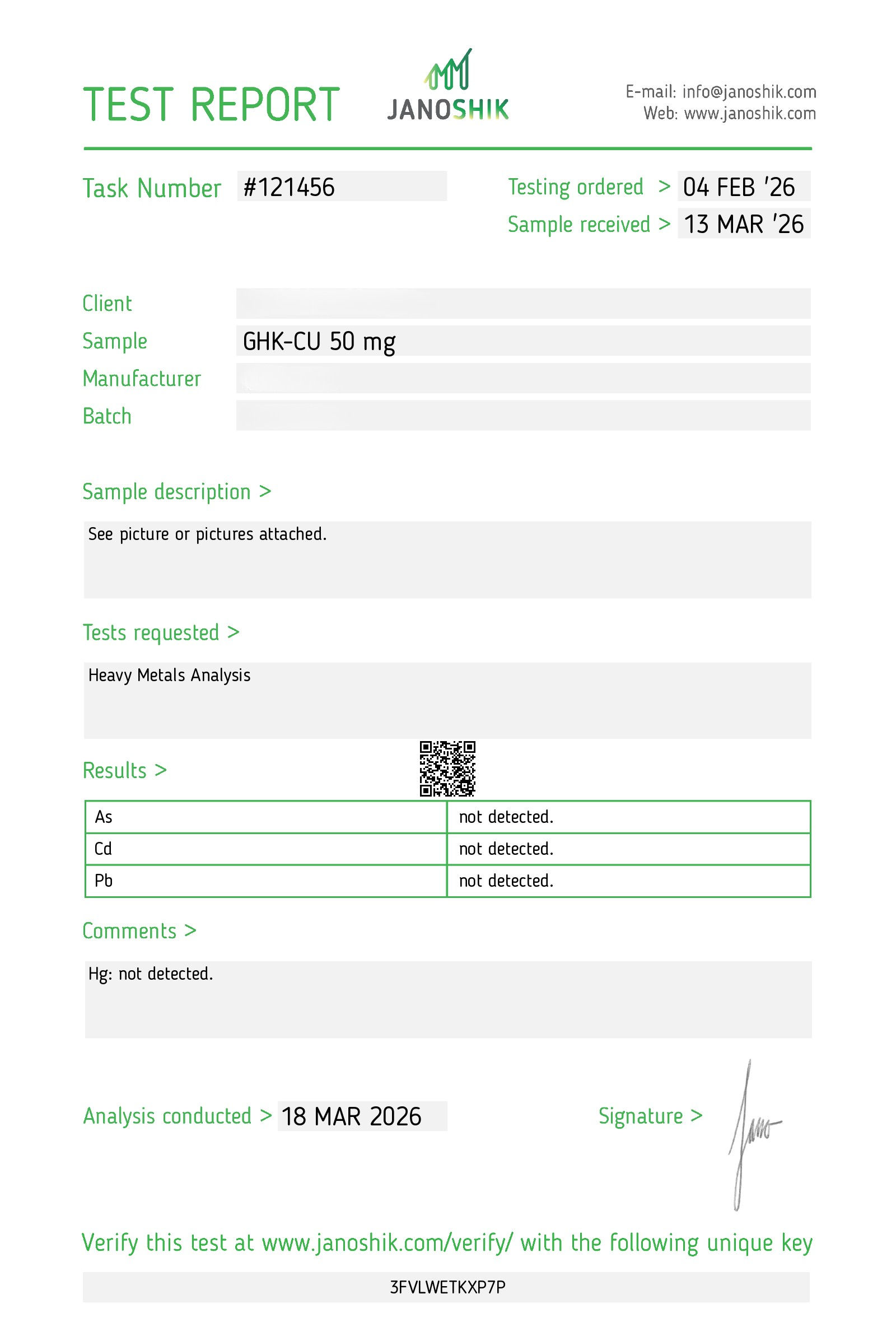
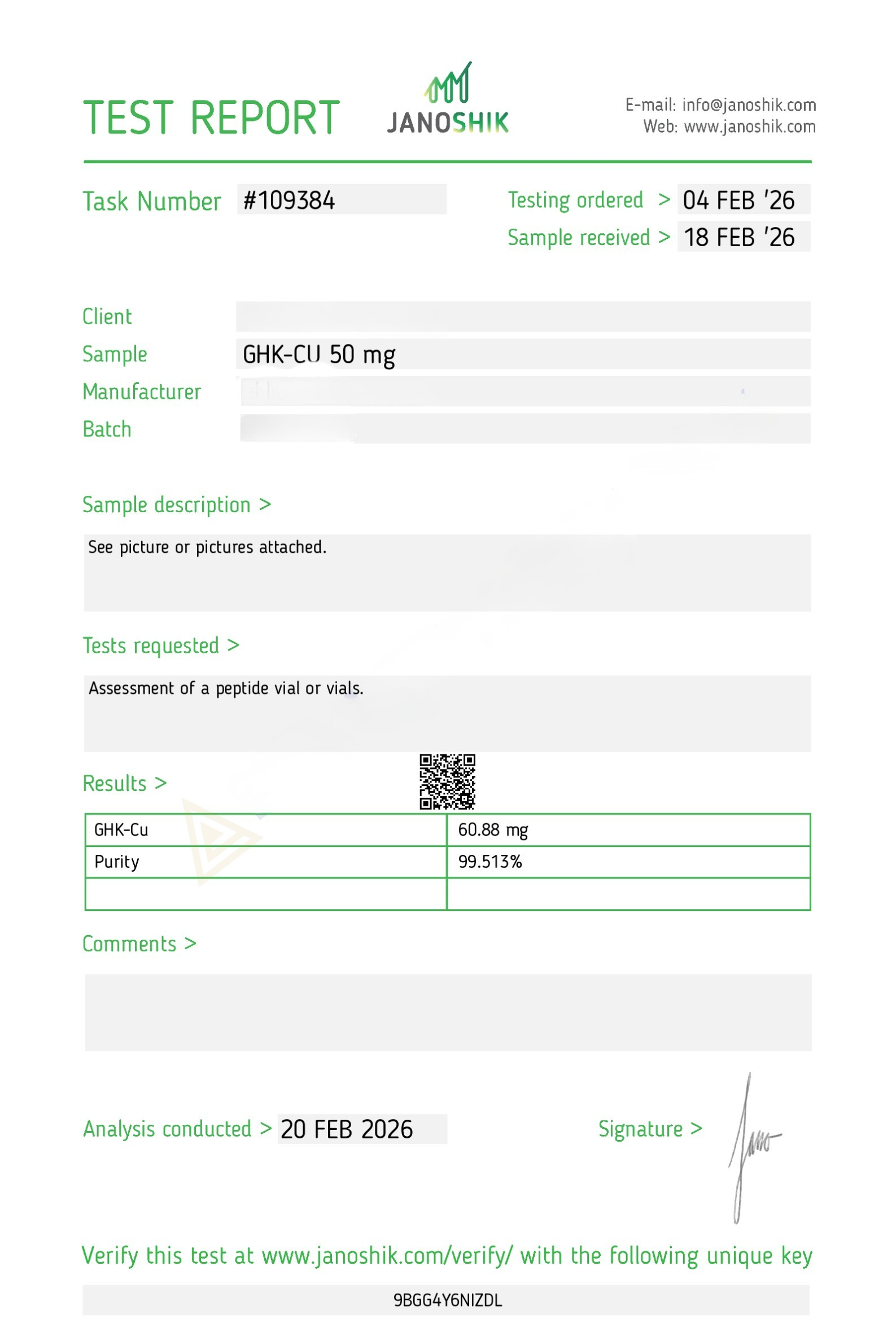
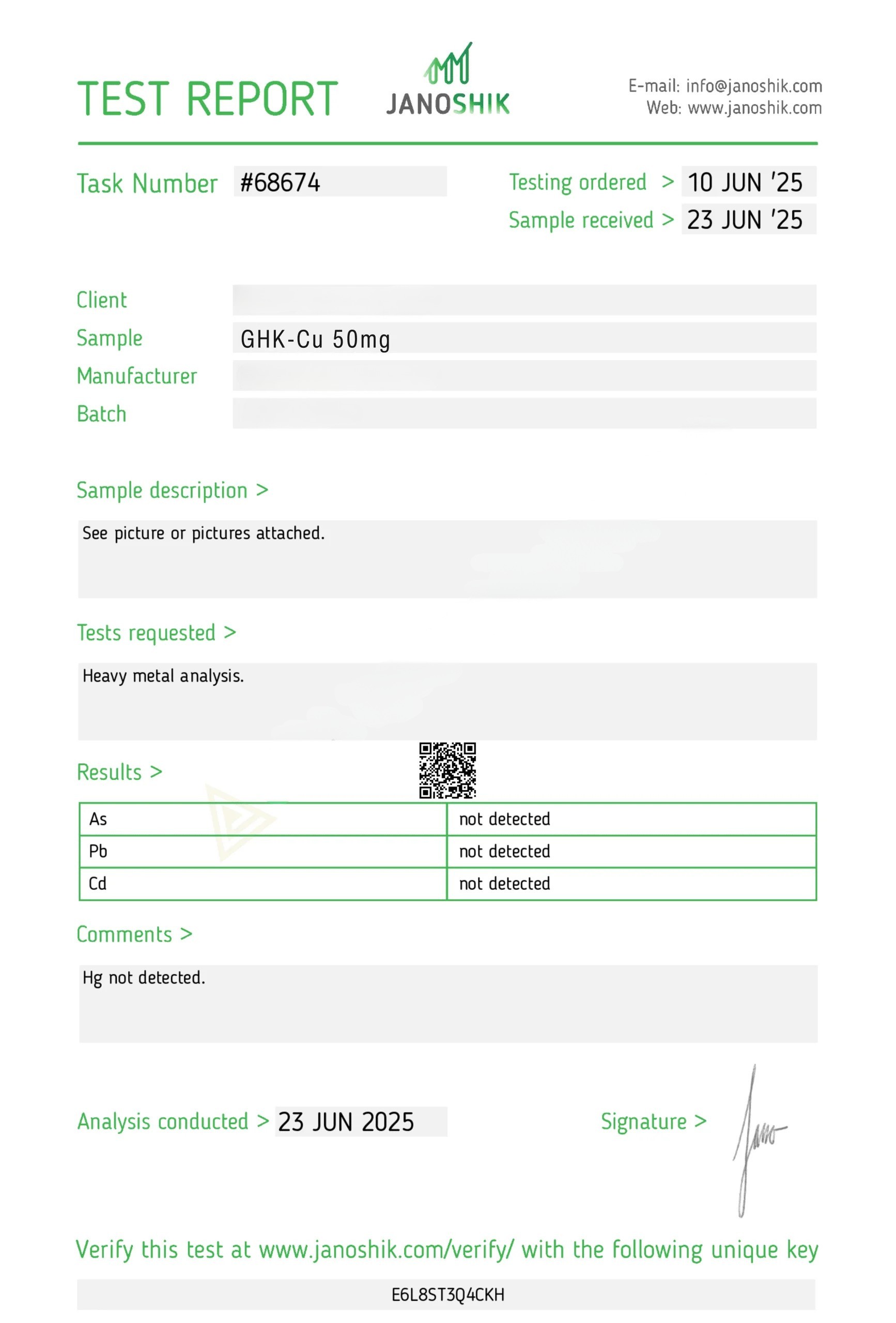
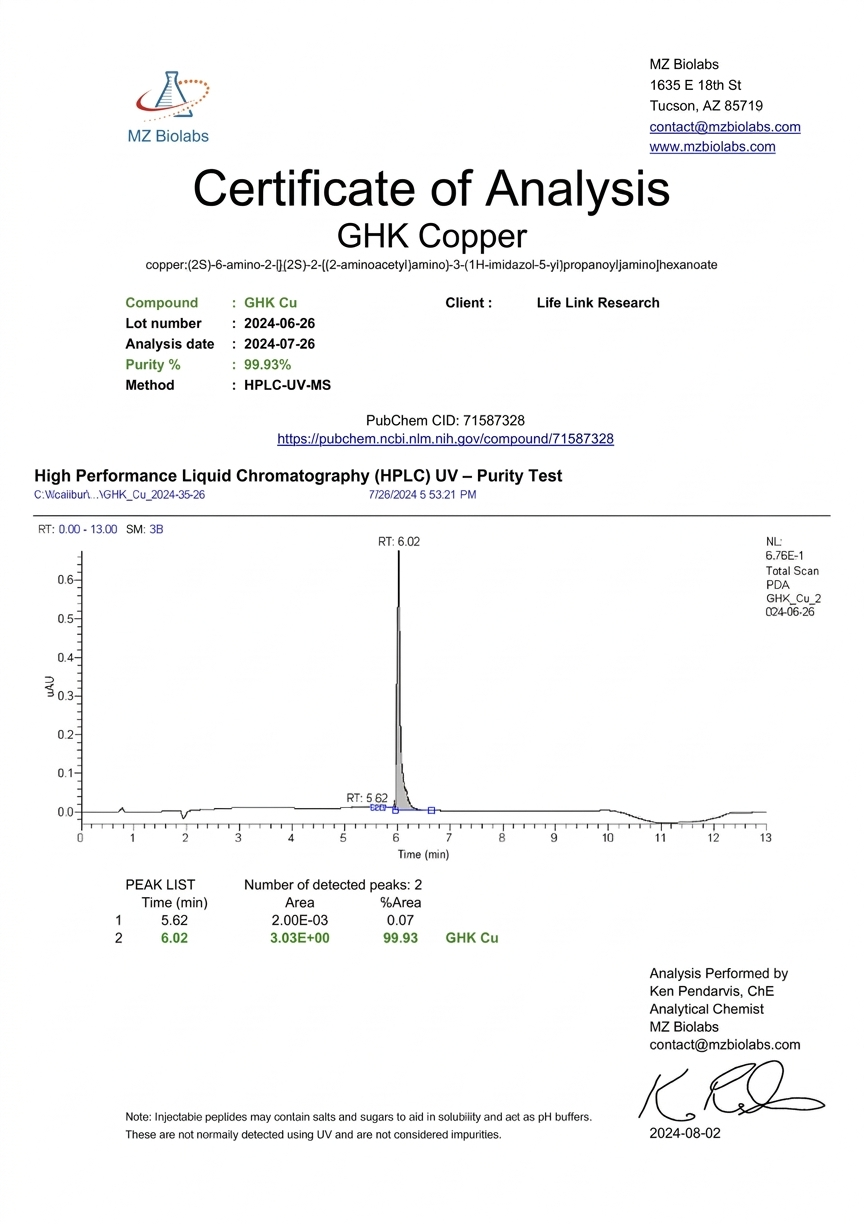
Certificate of Analysis
Independent laboratory testing confirms purity and composition of this research peptide.