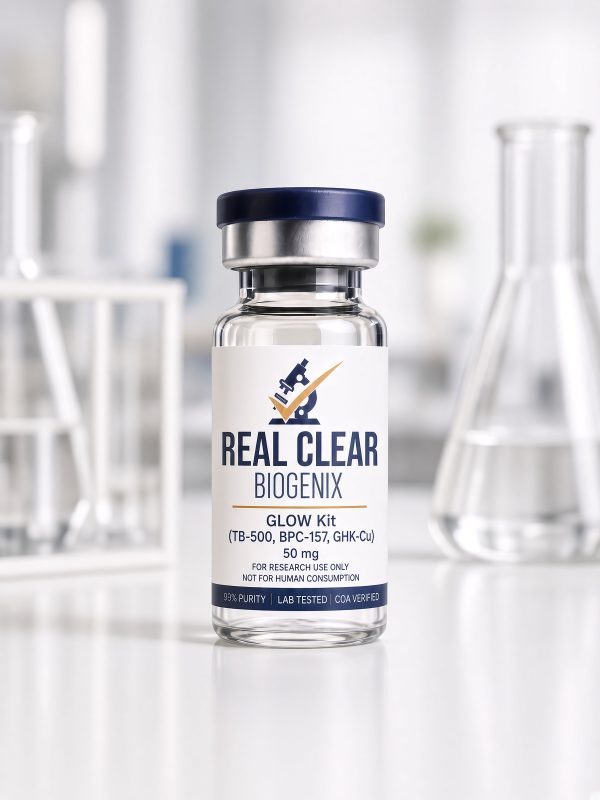
GLOW Kit (TB-500 10mg, BPC-157 10mg, GHK-Cu 50mg)
GLOW Research Kit Overview
The GLOW Kit brings together three separately identified research materials for laboratories studying peptide characterization, cellular signaling, tissue-related experimental models, and copper-peptide biology.
Each component has its own body of research and should be evaluated independently. The studies referenced below generally examine individual compounds in cell cultures, animal models, or scientific reviews. They do not demonstrate the safety, efficacy, or combined effects of this kit in humans.
Component Research Background
TB-500 10mg
TB-500 is an N-terminal acetylated peptide fragment corresponding to amino acids 17–23 of thymosin beta-4. Its sequence is commonly represented as Ac-LKKTETQ.
Research directly involving TB-500 has examined its chemical characterization, analytical detection, metabolism, metabolites, and activity in cell-based assays. A 2024 study used human serum, in-vitro systems, cultured fibroblasts, and samples from rats to examine the parent peptide and several metabolites.
Findings involving full-length thymosin beta-4 should not automatically be attributed to TB-500 because the two materials are not scientifically interchangeable. (PMID: 38382158)
BPC-157 10mg
BPC-157 is a synthetic 15-amino-acid peptide used in laboratory research. Published studies have examined it in experimental models involving gastrointestinal tissue, skeletal muscle, neurotransmitter systems, and other biological pathways.
The cited BPC-157 literature consists primarily of animal studies, cell-based research, and preclinical reviews. These findings do not establish gastrointestinal, musculoskeletal, neurological, or recovery effects in humans.
Relevant research includes a rat neurotransmitter model, a review of striated and smooth-muscle research, and a review of experimental neurological models. (PMID: 15840402, PMID: 36551977, PMID: 37242459)
GHK-Cu 50mg
GHK-Cu is a copper complex of the tripeptide glycyl-L-histidyl-L-lysine. Laboratory research has examined its copper-binding characteristics and its interaction with cellular pathways associated with extracellular-matrix activity, oxidative stress, cell signaling, and tissue remodeling.
The available literature includes experiments involving cultured cells, animal models, specialized liposomal formulations, and scientific reviews. These studies do not establish wound-healing, cosmetic, anti-aging, anti-inflammatory, or anti-cancer effects from this research material in humans.
Examples include research using endothelial cells and a mouse scald model, a rat and cell-based pulmonary model, and reviews of proposed cellular and gene-expression pathways. (PMID: 28370978, PMID: 35083444, PMID: 31809714, PMID: 29986520)
Combined-Kit Research Limitations
The included publications examine TB-500, BPC-157, GHK-Cu, their related compounds, or specific experimental formulations independently.
The references do not establish:
- Synergistic activity among the three materials
- The safety or efficacy of using the components together
- Cosmetic, recovery, anti-aging, or therapeutic outcomes
- Safety or efficacy in humans or animals outside controlled research
The kit should therefore be described as a convenient collection of separately identified research materials, not as a clinically evaluated combined formulation.
Testing and Documentation
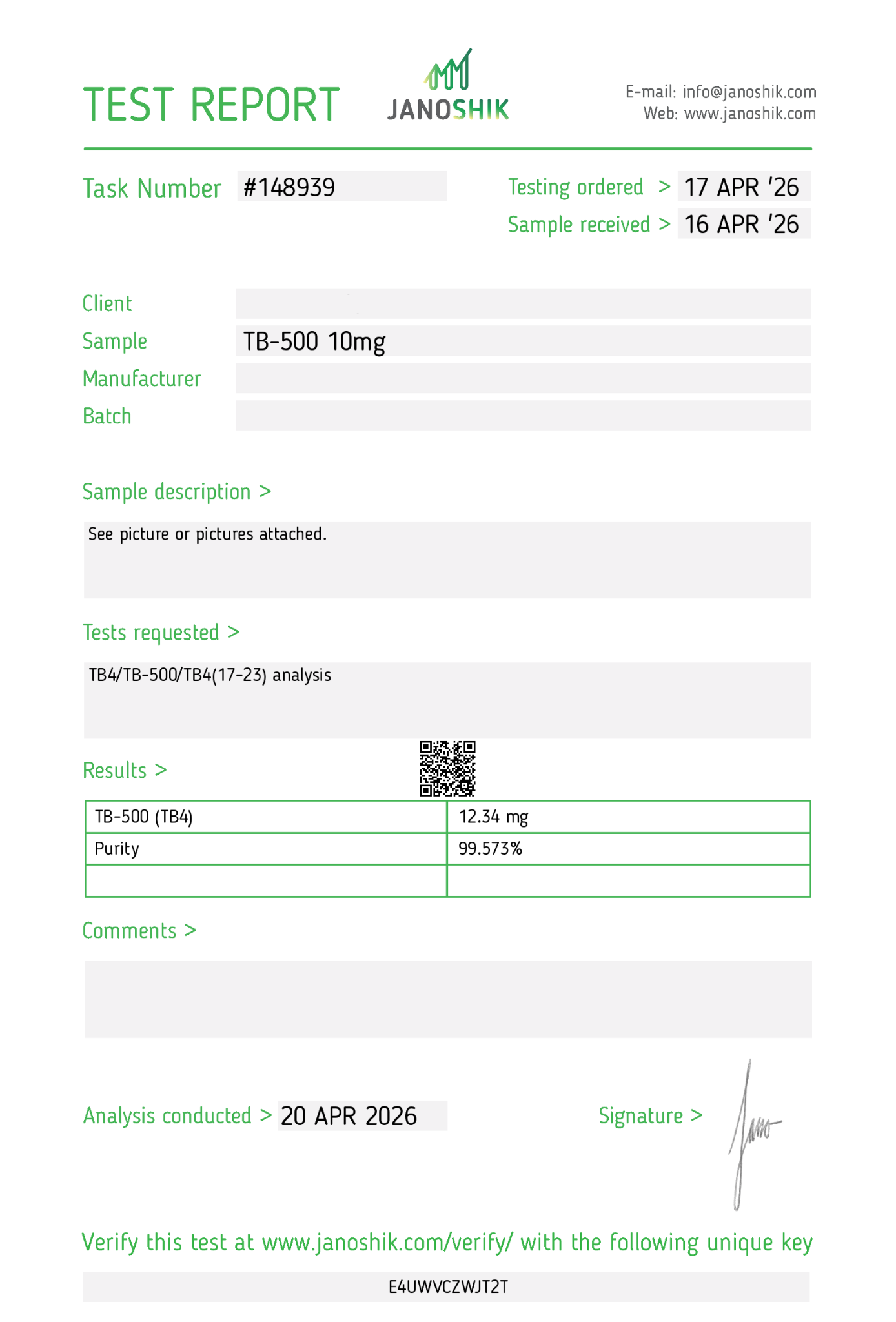
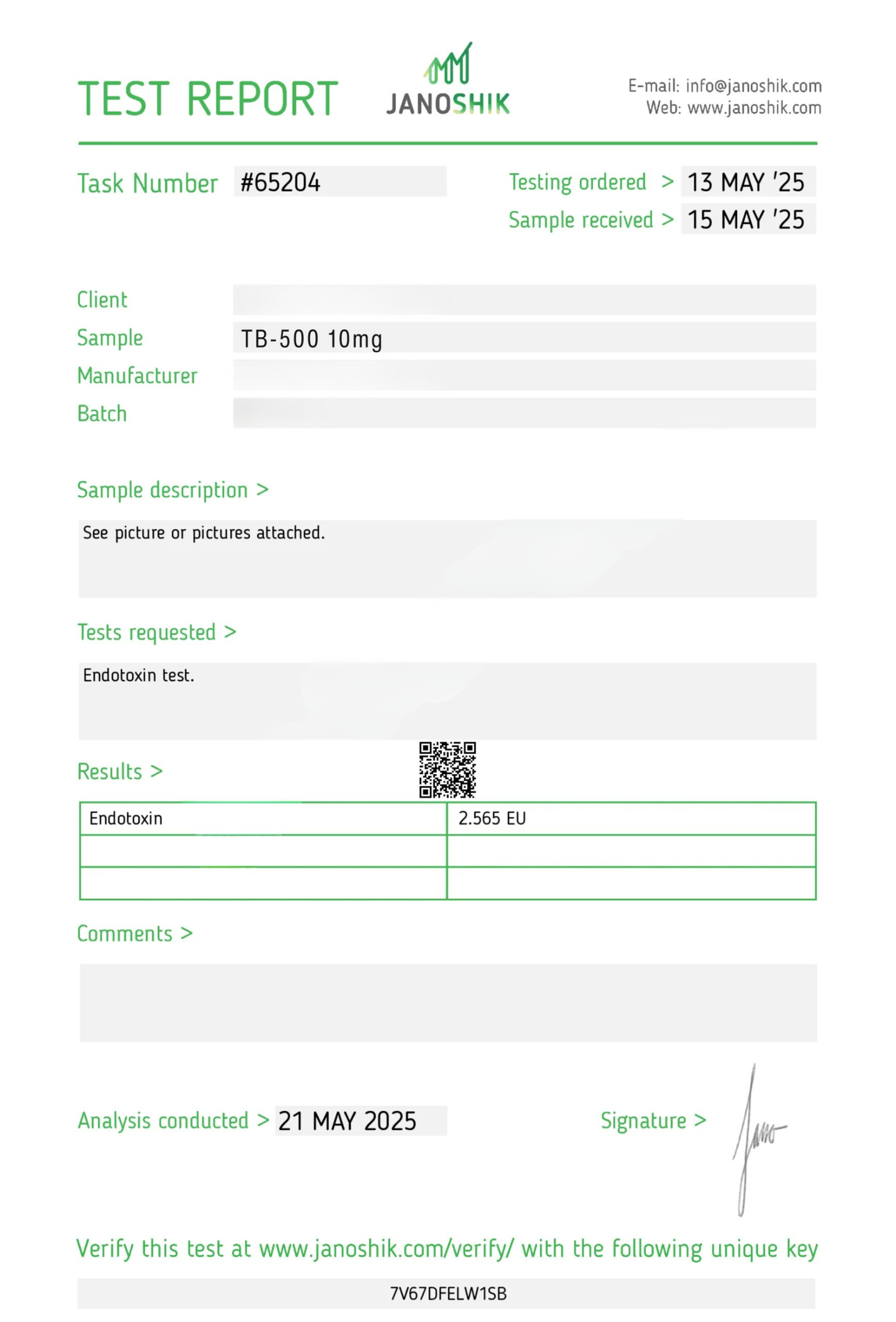
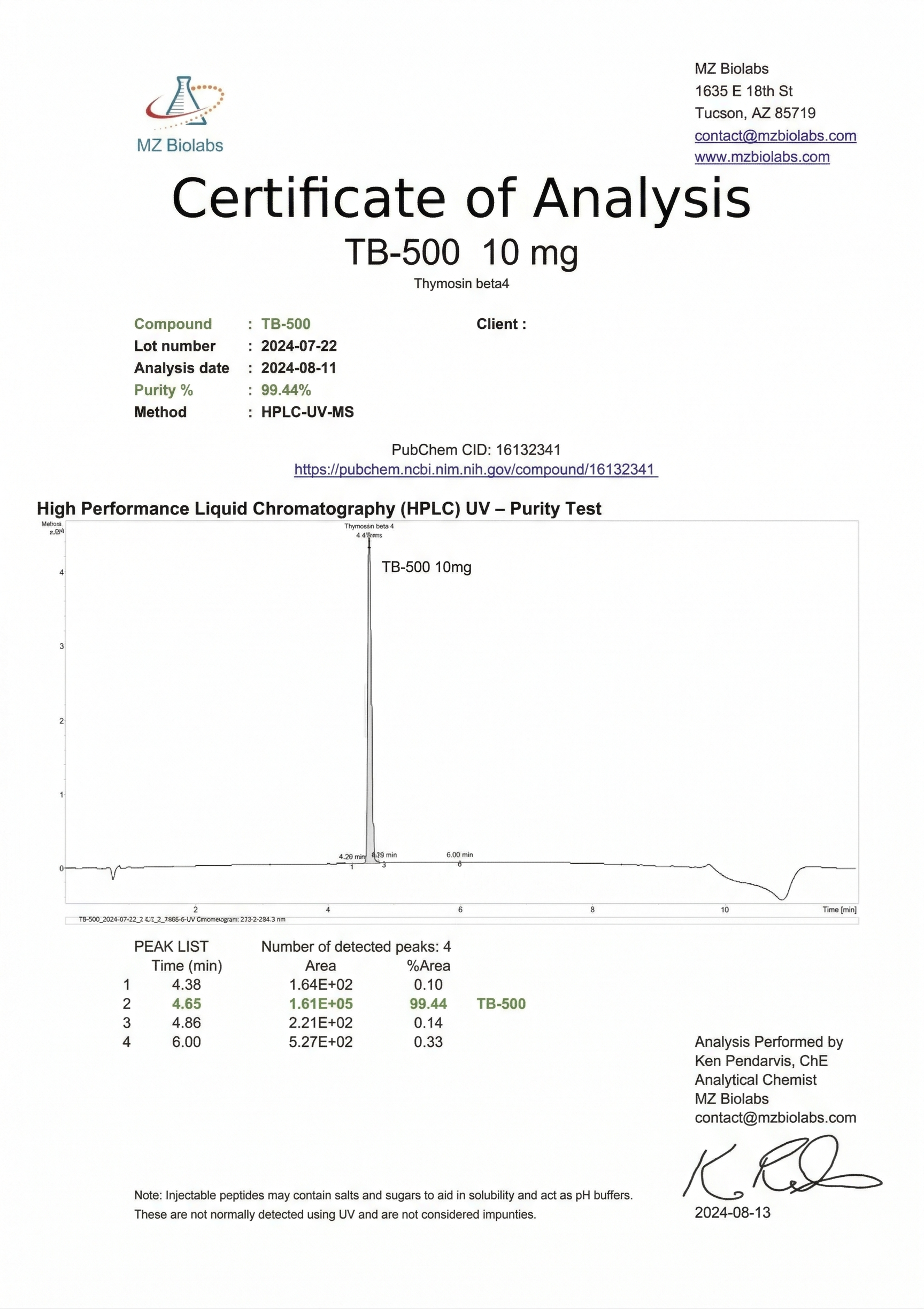
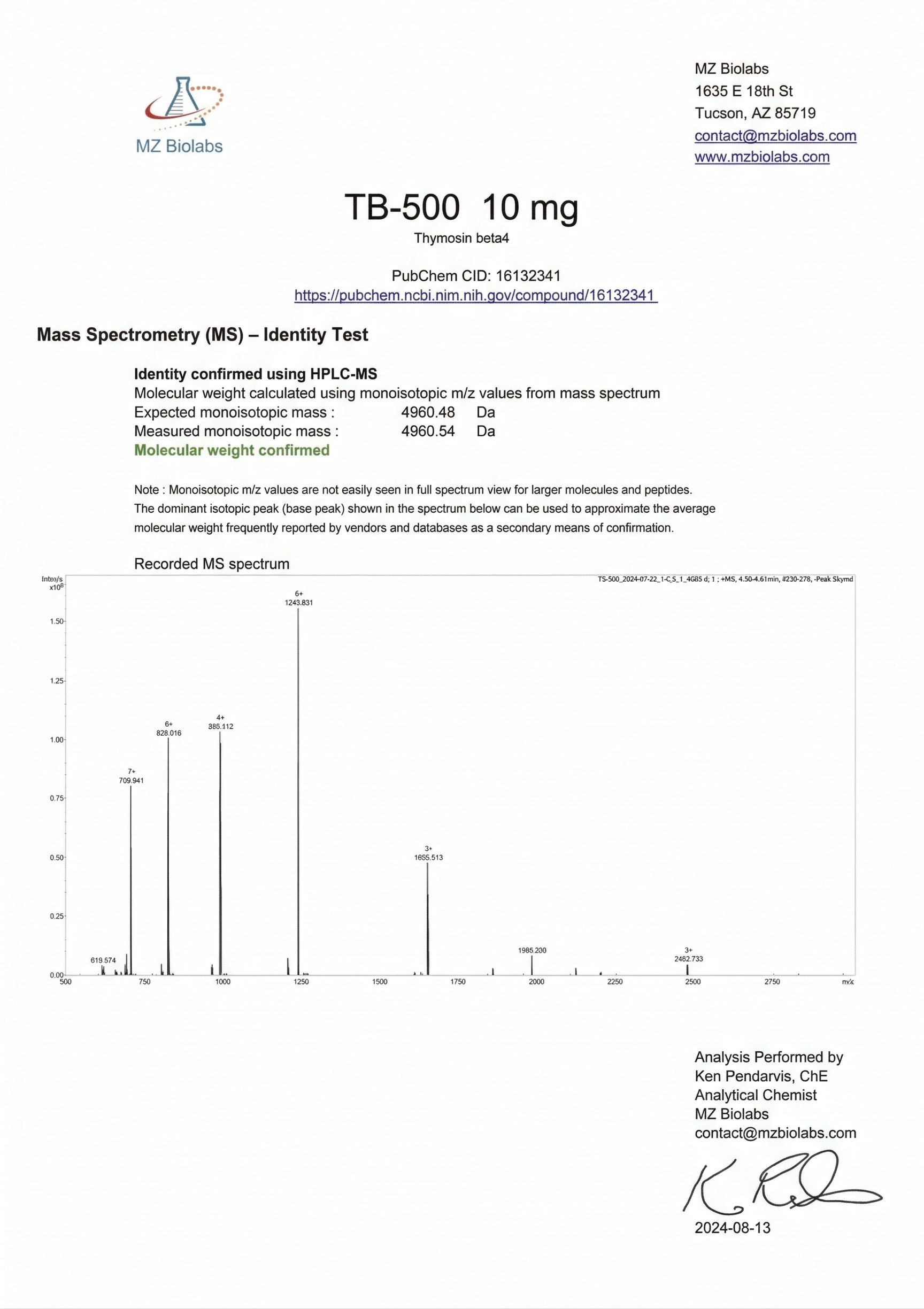
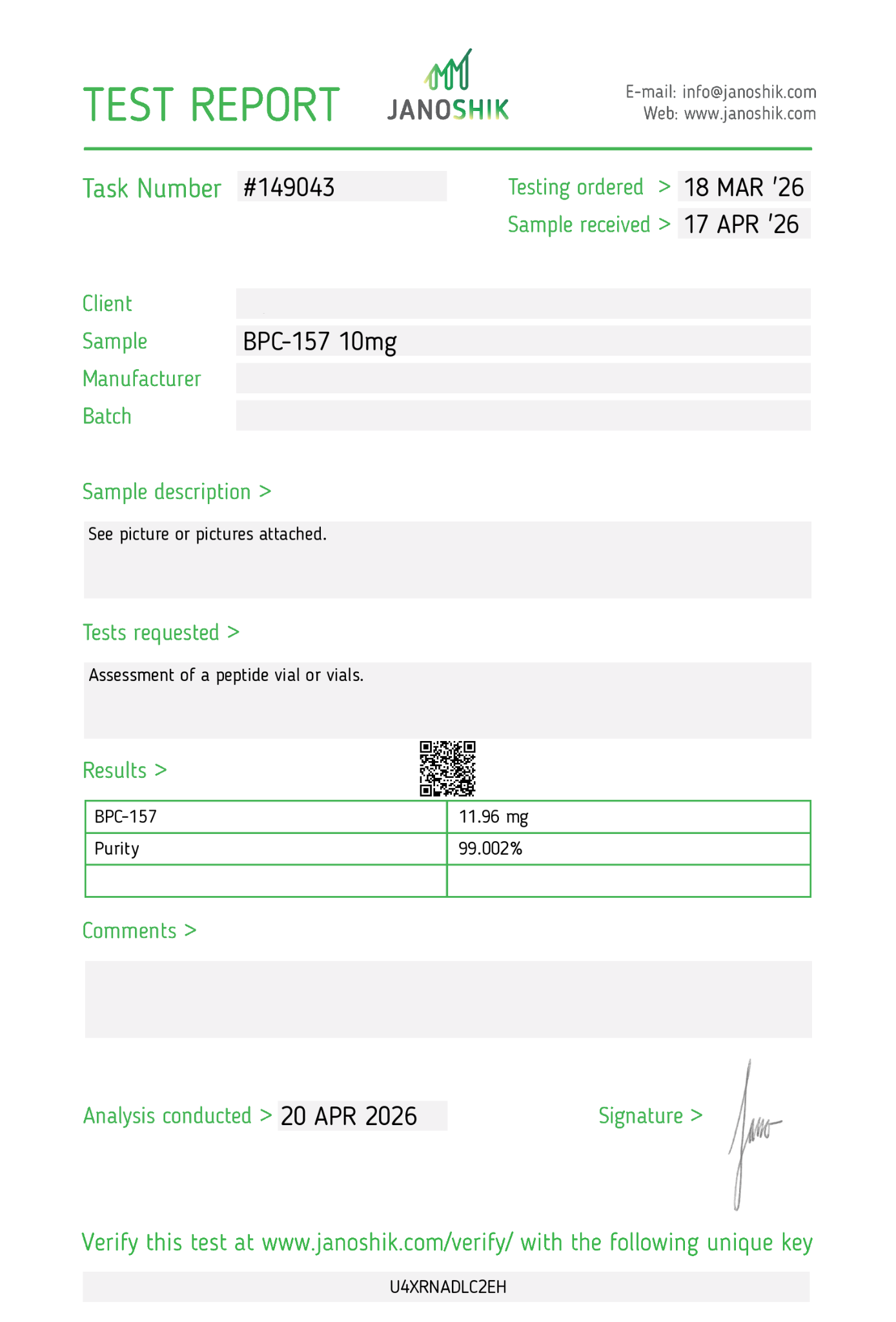
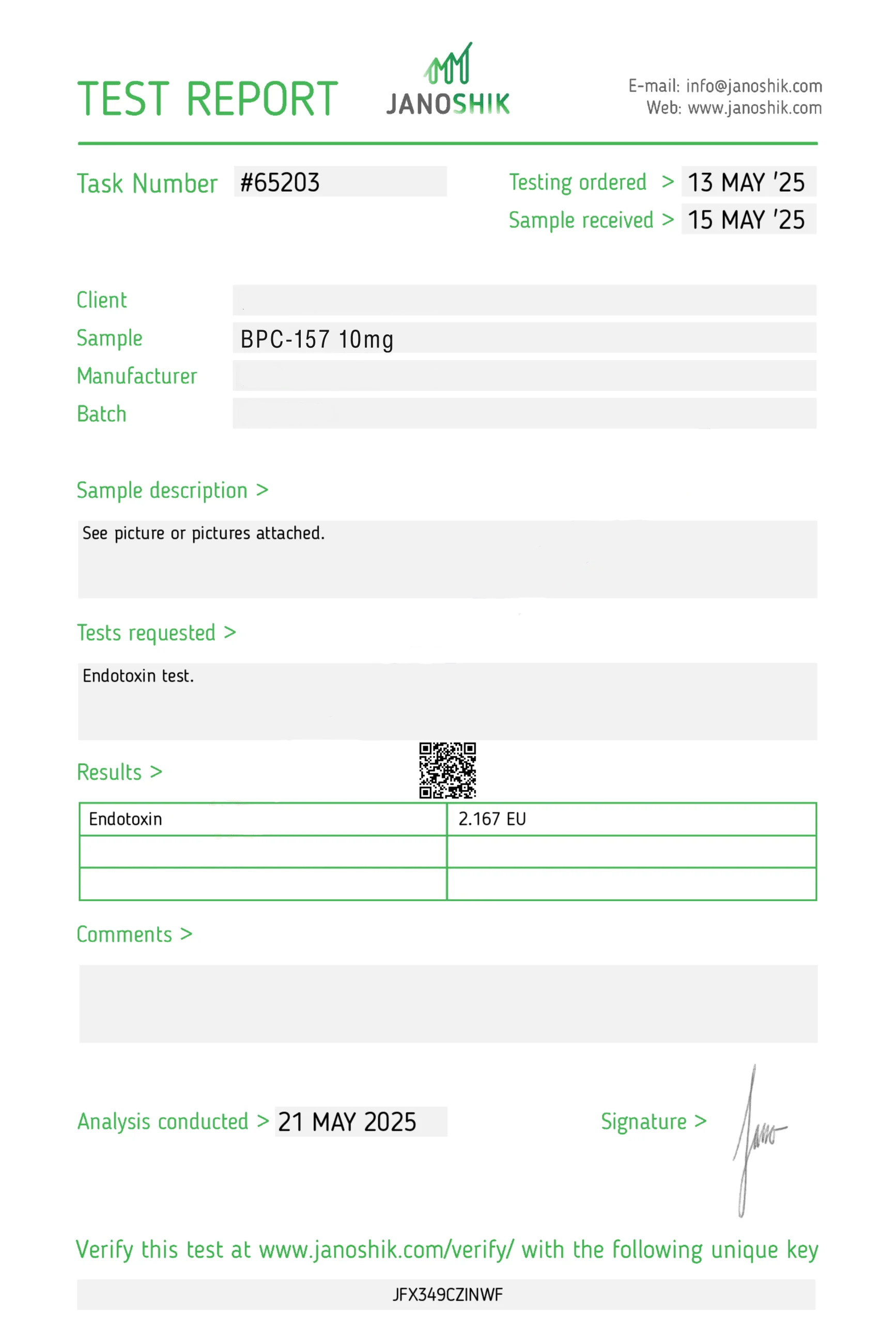
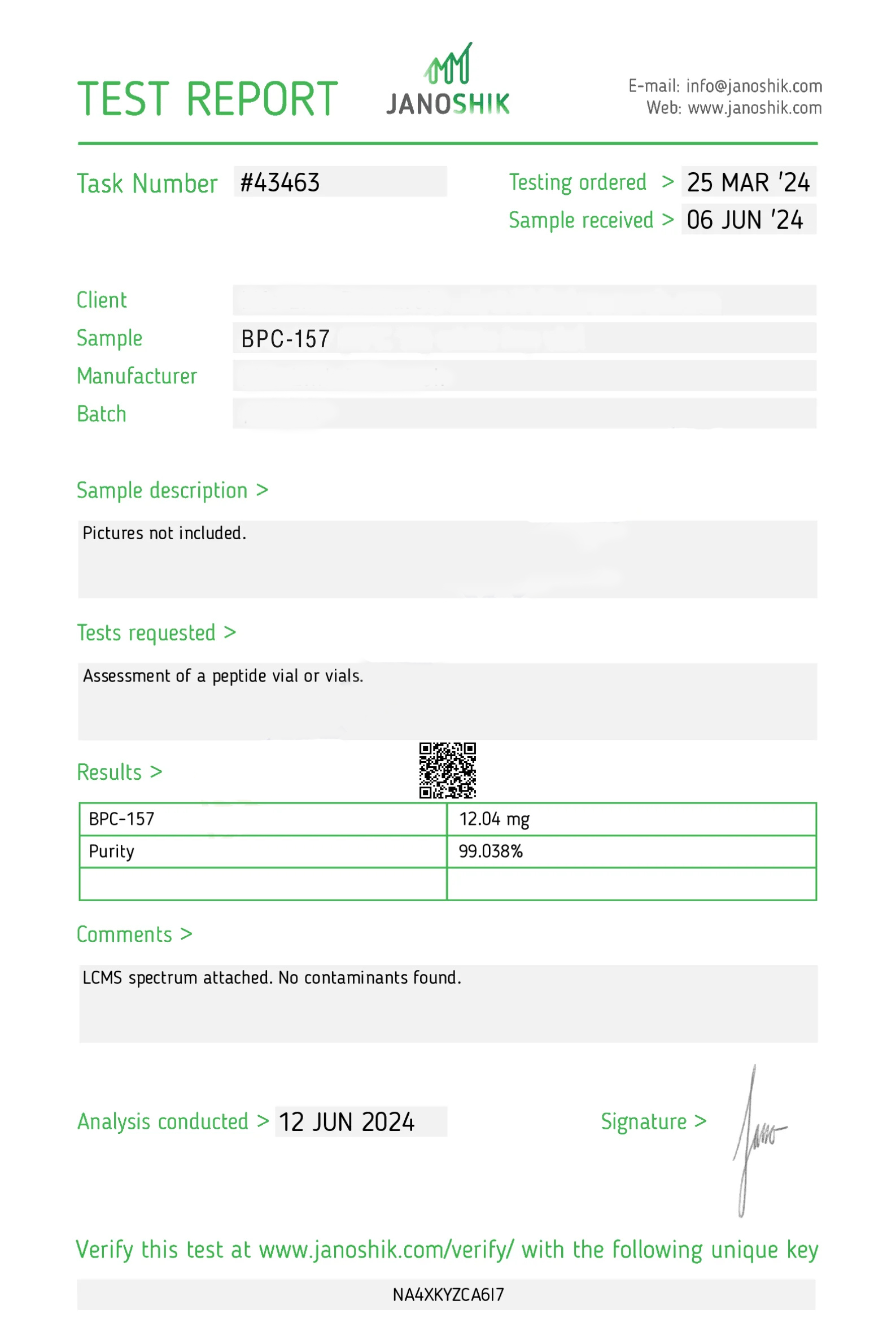
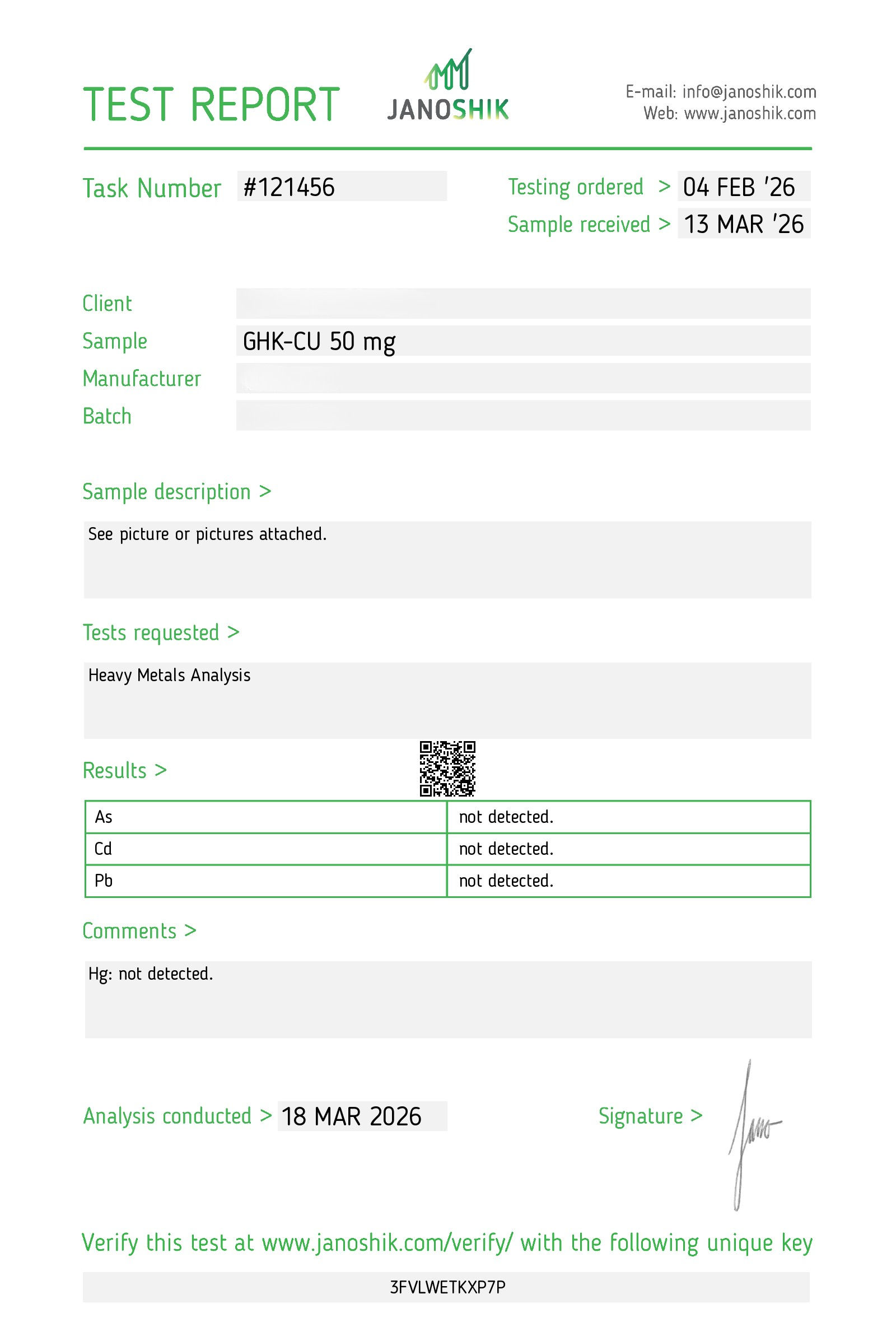
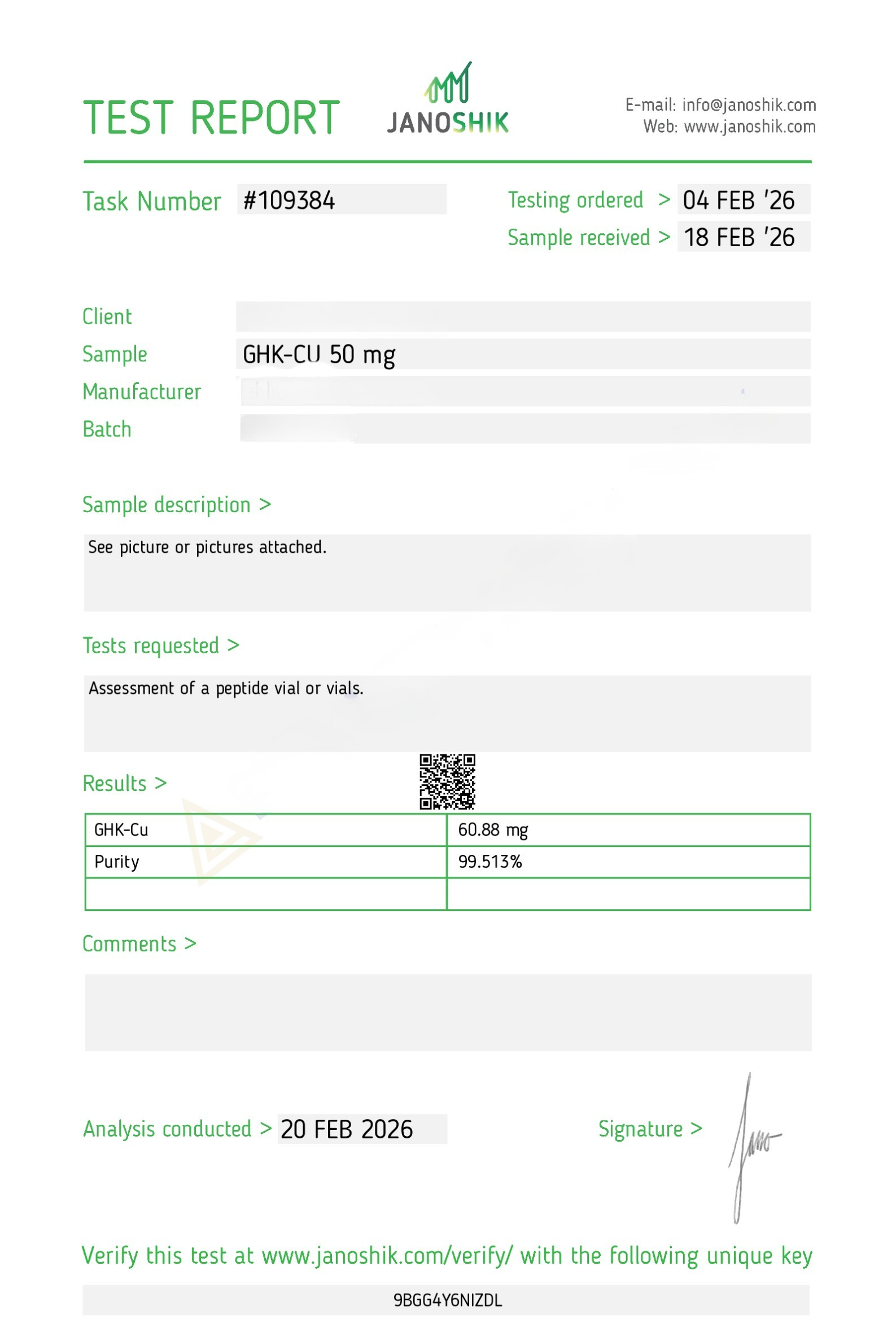
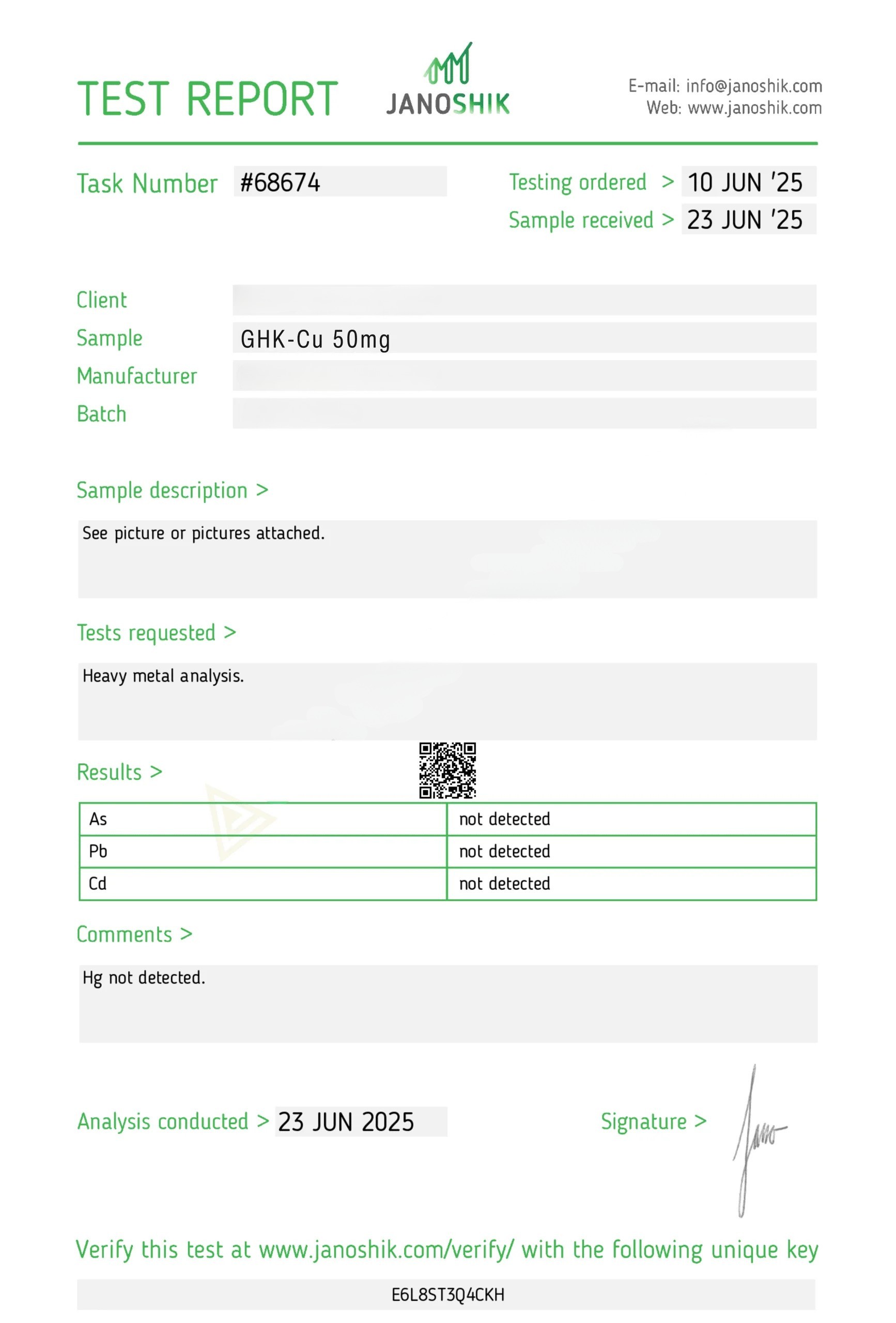
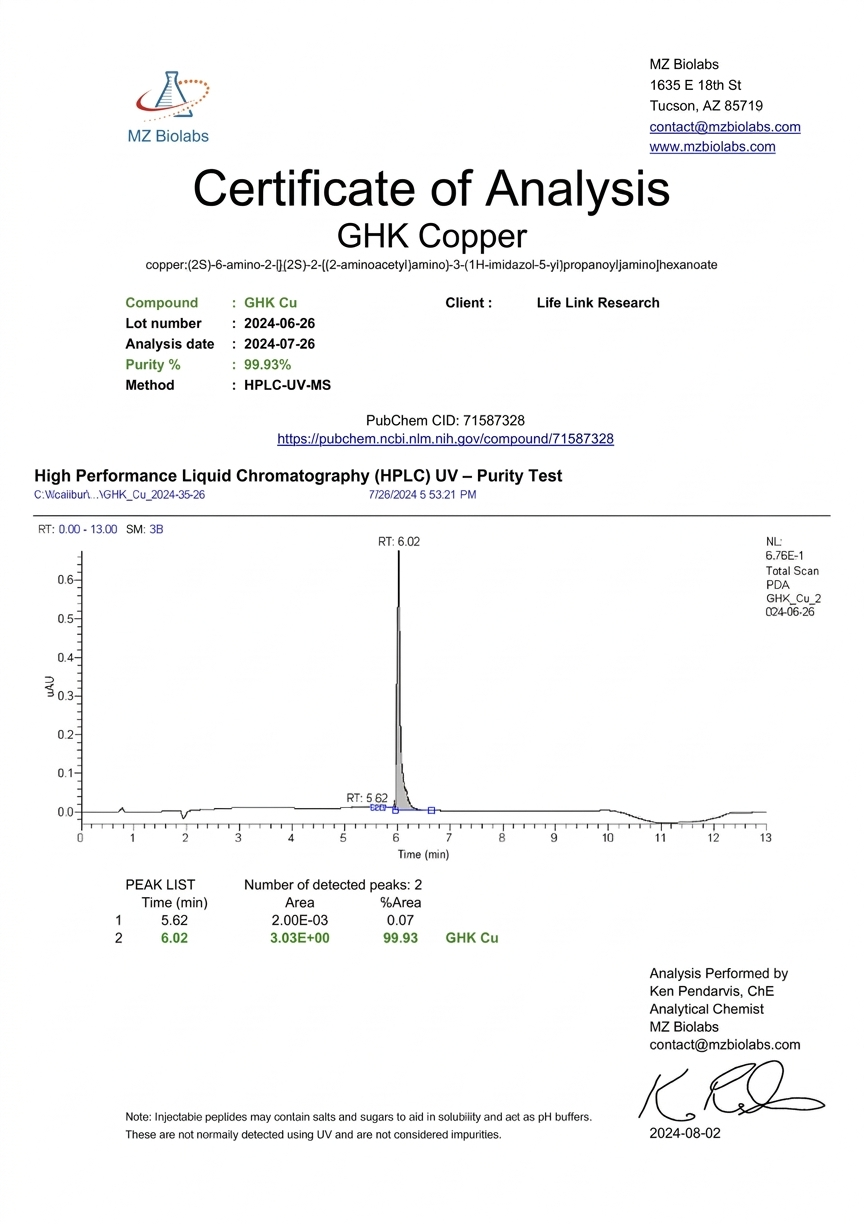
Each component should be reviewed using its applicable batch-specific certificate of analysis. Testing documentation may include identity, purity, weight, composition, or other measurements relevant to the individual batch.
Results associated with one component or batch should not be applied to another component or lot.
For laboratory research use only. Not for human or veterinary use.
Certificate of Analysis
Independent laboratory testing confirms the composition of each peptide in this kit.
This kit bundles individually lab-tested peptides — every certificate below belongs to one of the components in this box.